
SALTBONE: A conversation between Nia Lee and Nordia Simmonds
This article is a conversation between Nordia Simmonds, the curator of Into the Pluriverse, and Nia Lee, the artist and mind behind the installation SALTBONE.
SALTBONE considers salt as an archival lens, ritual material, and medium. This work is a major expression of Nia Lee’s Black Food Futurist artistic framework, which explores Black foodways and histories through sculpture, performance, and taste. This work in particular traces lesser-known histories of salt production across the diaspora.
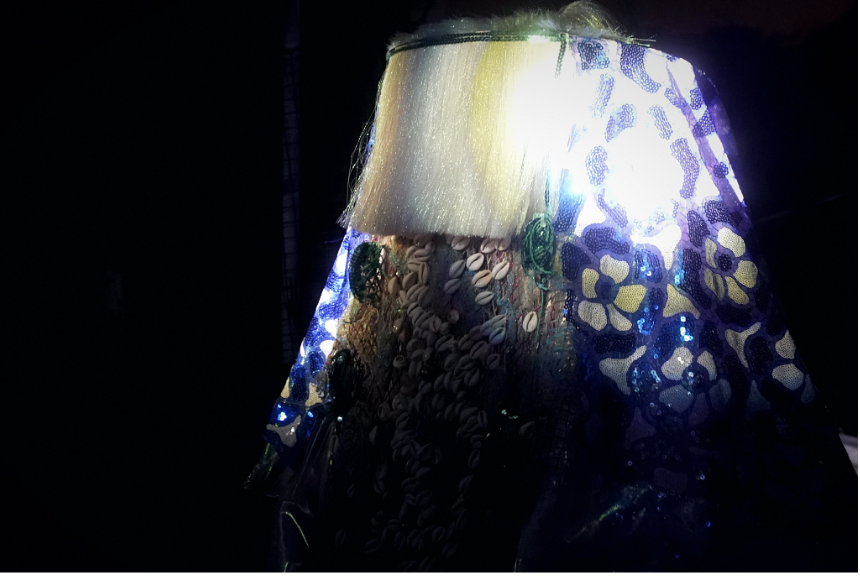
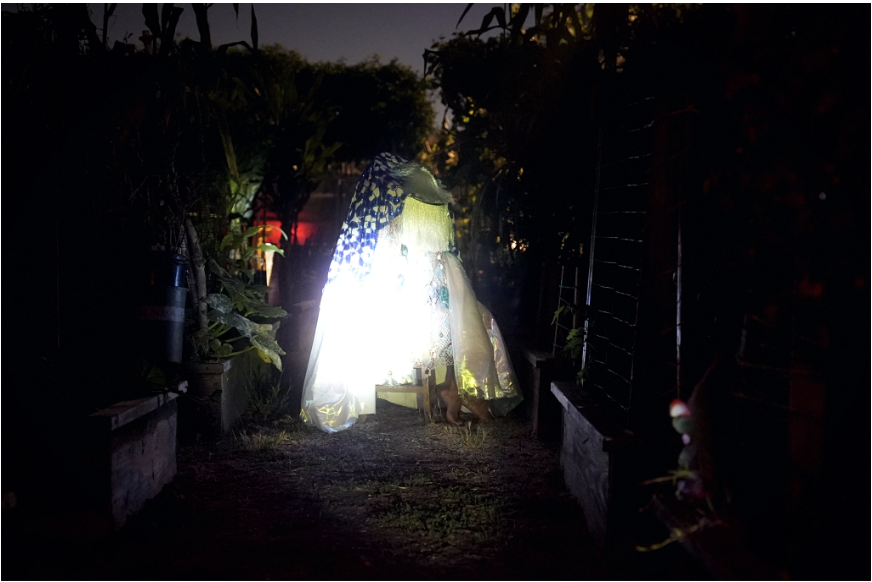
Nordia: Nia, it’s so great to sit down with you to talk through the creative process and realization of this stunning installation. I think the major component that is compelling to many people who walk through the gallery is the labor and care that went into creating the installation. So, let’s start there.
Nia: I'm deeply thankful for the opportunity to talk with you and share more about my work! I'm humbled and honored that it is resonating with so many people, and I'm excited for people to learn more.
The creation of this work was a full-body, mind, and spirit practice! The making of the salt and plaster busts was especially illuminating and was physically and mentally taxing in ways that ultimately informed the work. The process to make the molds that would ultimately be used to cast the busts took 4 hours alone and required me to be covered in goo and plaster! I later learned that a lot of folks back out of this process midway because of how intense and claustrophobic it is. What grounded me in this process were my musings and research about salt and Blackness. I kept thinking about salt as preservation, salt as extraction, salt as archive, salt as wound, and felt like I had something I could hold on to.
Nordia: Wow! That sounds incredibly intense. I remember from some of our conversations that you mentioned having to drop into deep meditation to get through that. In that way, you are tapping into that technology that was coursing through those enslaved ancestors as they worked the salt pans.
Even when I think back to how we crossed paths—you stopped by Sovern for the first time ever, and I was there in the early ideation of the show—I see this thread in both of our works of dancing between the academic and spiritual to bring out these lesser-known histories. How is that reflected in your work as a Black Food Futurist?
Nia: As a Black Food Futurist, archival research plays a vital role in my artmaking. Sometimes archival research looks like traditional scholastic research on historical narratives; other times it looks like a spirit-guided intuitive practice where I highlight the untold and lesser-known stories of my ancestors. Both played a key role in the making of this work. Recently, the histories of Black labor and sugar have taken center stage in both the art and academic worlds, and I became curious to see what the connection is between Blackness and salt. What I found changed me forever. The history of Black labor and salt goes wide across the diaspora and deep into the heart of what it means to be human.
Nordia: That is a powerful statement. The question of what it means to be human. When I deep dived into that question, it brought me to the curation of Into the Pluriverse. And that question is not an anthropological one–for me at least–it’s ontological.
In the term “pluriverse” itself, the Zapatistan community is confronting colonial-era myths that range from the Cartesian splitting between mind, body, and spirit, to the construction of social structures such as race and gender, radically shifting the modes of relations that persist across the imperialist projects. And–I believe–that the ongoing practice of remembrance is realized through storytelling these dying traditions and re-storying our ways of being in the world. That said, I am really curious to hear what histories arose in your research?
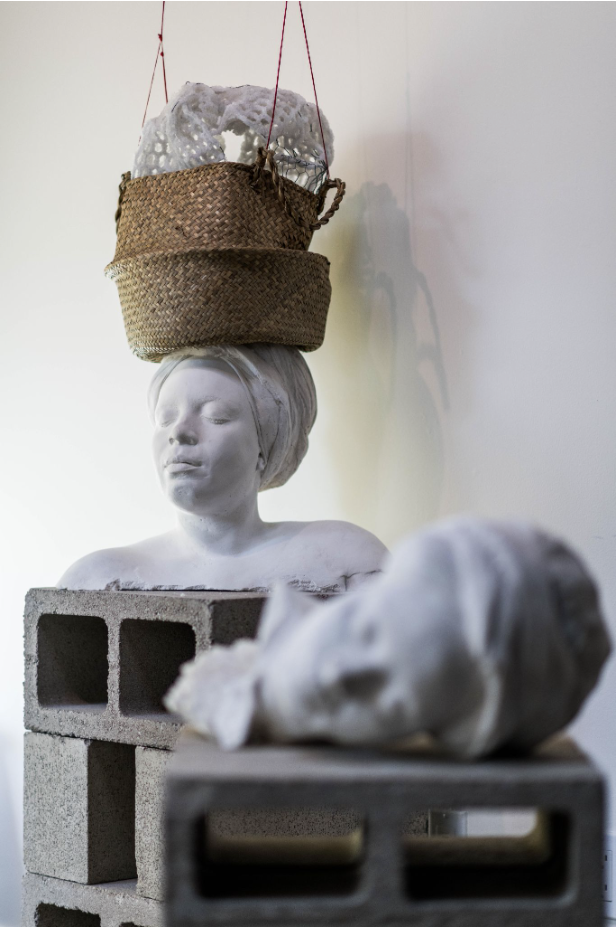
Nia: Absolutely! I was deeply inspired by the histories of enslaved Africans who labored in Bonaire’s salt pans under Dutch colonial rule. The salt pans sit near bone-white salt flats and turquoise waters and create a landscape where beauty and brutality coexist. Enslaved people worked under the blinding reflection of salt and sun and stood for hours in briny, supersaturated saltwater. Some accounts describe salt wounds and salt blindness as part of the brutal conditions of this labor. The bone white surfaces, closed eyes, and ghostly salt deposits in SALTBONE are directly connected to this history.
I was also moved by the histories of salt and Black labor in West Virginia’s Kanawha Valley. The region sits above ancient underground brine deposits connected to the Iapetus Ocean, which I learned is older than the Atlantic, WILD, right? In the 19th century, the Kanawha Valley became one of the most important salt-producing regions in the United States, and Black people labored throughout the industry during enslavement and post-emancipation.
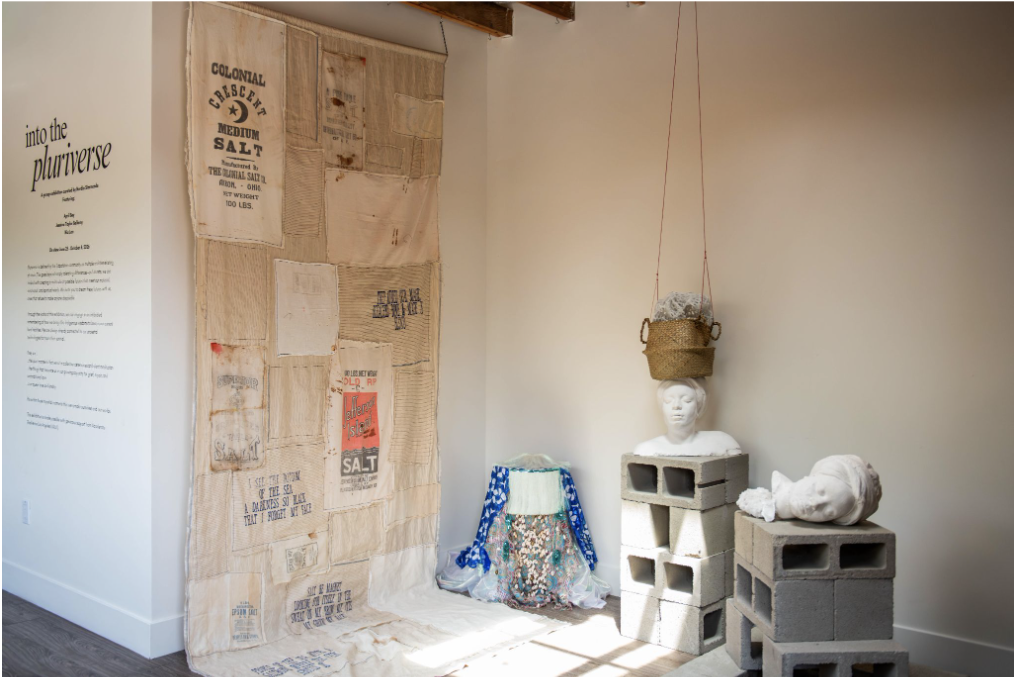
Nordia: And we see that reflected in both the staunch and meditative expression on the busts. They sit atop the industrial material of the cement blocks, while holding up a hand-woven basket filled with salt crystals–a representation of the complex entanglement of enslaved bodies with salt. One of the bust’s–laid on its side–has a salt crystal at the base where the salt is seemingly eating away at the body. In this trio, you capture the sentiment you shared earlier that salt is preservation, extraction, archive, and wound.
All of this taken together is incredibly psychologically heavy. With the weight and breadth of this history, were there any elements of grounding that you infused into the work that supported you in translating this information into the exhibition?
Nia: I come from a rich lineage of my Black ancestors finding ways to hold the fullness of the human experience--- the beauty, the pain, the brilliance, the joy- all dance together in my bloodline and make it possible for me to find buoyancy while touching to the depths of some difficult histories. I wanted to invite everyone into that process of holding wholeness.
For the textile work in SALTBONE I sourced archival salt bags connected to plantations, mines, and saltworks where Black people labored. This felt critical because I wanted the work to hold material evidence and also give the people who worked these lands a voice.
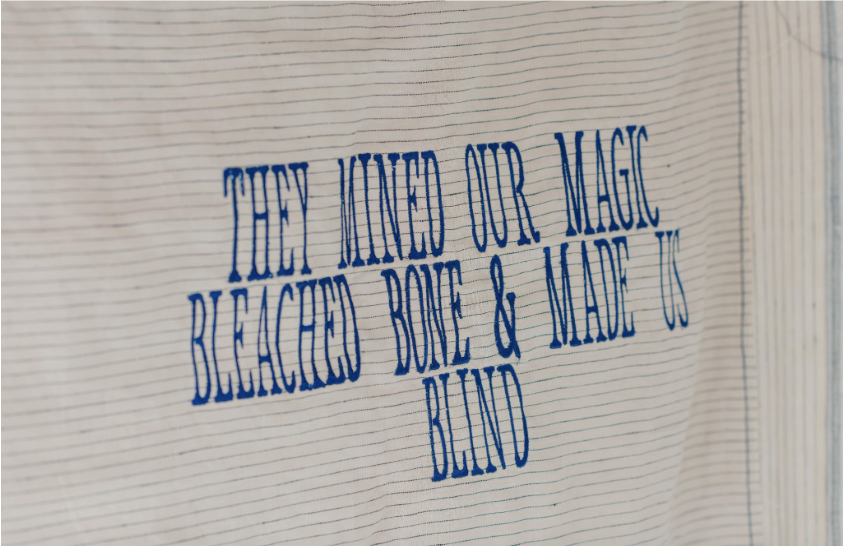
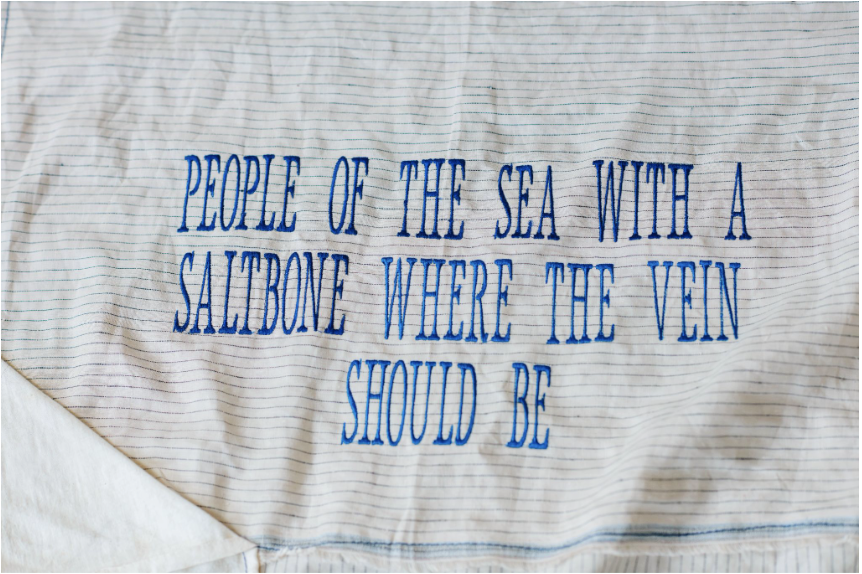
I was also able to find balance and buoyancy by tapping into the spiritual practice that we touched on earlier in the conversation. Salt and water play major roles in Black diasporic spirituality. These elements appear as agents of cleansing, protection, and blessing and play a big role in my own spiritual practice. Olokun, the Orisha of the deep ocean, became an important spiritual presence in the making of the work and offered me a way to think about what lies beneath the surface of the earth and surface of myself.
Nordia: That is a beautiful closing to end our conversation. Thank you so much for talking to me about your work, and for the love, labor, and care that you poured into this installation.
Nia: Thank you too for the opportunity to be part of the exhibition; it’s truly been an honor.
______________________________________________________________________________
Nia Lee (they/she) is a Los Angeles-based artist and writer whose practice materializes Black
Food Futurism through sculpture, installation, ritual, and communal performance. Their work explores Black memory, domestic labor, taste, and spirit as portals for ancestral connection and speculative possibility. Nia’s work moves fluidly between material experimentation and multisensory worldbuilding and creates artworks and experiences that merge archival histories with embodied, future-facing imagination. Nia’s work attends to care, liberation, and the architectures that shape Black life.
Into the Pluriverse is an interdisciplinary, group exhibition that incites the co-conspiracy of many ways of being human. The term pluriverse is a Zapatistan term that illustrates a commitment to and the concept of a world in which many worlds fit (Malandonado-Villalpando, 2022). Through the particularity of Afro-Caribbean diasporic worldmaking practices, the exhibition seeks to trouble ways of being that think of nature as necessarily perfect and untouchable, to highlight queer/multispecies kinship, Black arboricultural practices, and ancestor veneration as vital to temporal (re)negotiation. It proposes the artworks of Jessica Taylor Bellamy, April Bey, and Nia Lee as tools for interrupting systems of oppression and erasure. This program is presented through the generous support of Accelerate Resilience Los Angeles (ARLA). On view at Sovern LA from June 25th to October 8th, 2026.
